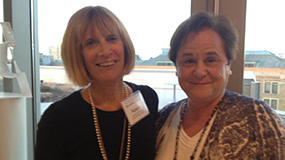
In October, I attended the Motivational Interviewing Network of Trainers (MINT) annual conference in Atlanta, GA. As always, I felt invigorated and refreshed about my ability to teach and train others in MI , and learned many new ideas. Over the next few posts, I will tell you about some of them.
One set of ideas came from Ken Resnicow, who is a professor of Health Behavior and Health Education at the University of Michigan School of Public Health. Ken is a master MI trainer, and provided an excellent session with a wealth of ideas for MI training.
He spoke about converting questions to statements. This is important because one important goal in MI is to ask fewer questions and when you do ask questions, make them open. Here’s an example:
Patient: “There’s lots of diabetes in my family, so I’m concerned.”
Clinician: “How many relatives of yours have had diabetes?”
Make this into a reflective statement instead of a question. Remove the “how” and it becomes “Many relatives of yours have had diabetes.” Remember that your voice drops at the end of a sentence when it’s a statement, but goes up when it’s a question.
Here’s another example:
Patient: “I’ve cut back on my drinking.”
Clinician: “How much less are you drinking these days?”
Make a reflective statement instead, “You’re drinking less now than you were.”
Many of us ask too many questions! Find ways to make these into reflective statements.